
Europe's history, culture and its iconic landmarks are experienced best by being able to walk through the streets of Walkable Cities in Europe. Many places in Europe are readily accessible by walking, whether on the streets of old town or in the squares, along the riverside or through beautiful parks.
Walking also enables travellers to explore places they might not find if they were driving or taking the train. Dublin, Barcelona, London, Rome, Berlin and Brussels are among the cities featured in this guide.
A walking route is recommended for each of these destinations, providing the visitor with good opportunities to explore the atmosphere, architecture and local character while also being connected to popular attractions.
Walkable cities in Europe
Europe simply can't be topped when it comes to cities bursting with excitement. While there may be the medieval old town, the shop-till-you-drop pedestrian friendly high street and cool modern things to investigate, how do you pack everything into one trip? Thankfully, MotelOne has sifted through to reveal the most walkable cities in Europe and done all the hard work for us.
Below, we have taken their top 20 and chosen a recommended walk to explore each one, for it is always at its best experienced entirely on foot than any other way by road or rail; read on to see exactly which cities are included.
Read More: 21 Places Where Treasure Might Still Be Buried
Dublin, Ireland
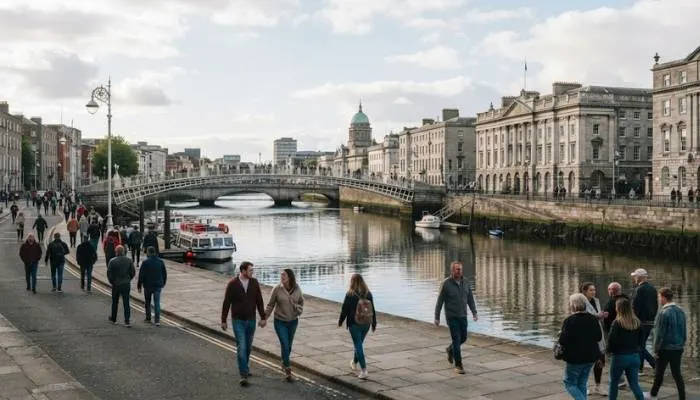
Kicking us off at number 20 is Irish capital Dublin. Head out from the Jameson Distillery on Bow Street and stroll along the waterfront, across O'Connell Bridge to the National Wax Museum. You can then pay a visit to Dublin Castle before heading to the Guiness Storehouse there really is no better place to enjoy a pint of the black stuff.
Make a stop at the Teeling Whiskey Distillery before making your way to the city centre and popping into St Stephen’s Park for a bit of fresh air on your way to the Little Museum of Dublin for a glimpse into the lives of Dubliners for the last 100 years. It takes approximately an hour and half at a total distance of 4.2 miles (6.7km) in 8,792 steps
Barcelona, Spain
This walk around Barcelona can be quite uphill at times; however, I can guarantee that it is more than worth the effort. Starting from Ciutadella park, make your way along the broad boulevard La Rambla, bordered by tall trees, and you will shortly make it to Casa Mil, which architecturally is quite cool for its fun, curved roof; it won't be long before you complete most of the famous landmarks as you finally make your way toward Gaudi's famous La Sagrada Familia.
This could be where you take a break; however, if you do not carry on toward the mesmerizing Park Güell. Lounge around on one of the mosaic-covered undulating seats after finishing this route, which spans 4.10 miles (6.6 k) with steps adding up to approximately 8,661.
London, England
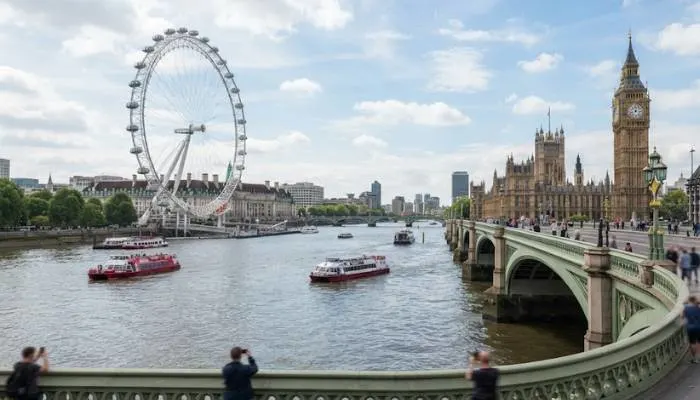
A tour of London really could start no better than with a delightful walk that begins right here at the front of Buckingham Palace. Keep St James’s Park straight ahead, while you peek in to spot the annoying pelicans and parakeets, and when you reach the end, stand to admire the stunning views of Big Ben.
Head over the Westminster Bridge, hugging the south bank of the Thames as you pass the iconic London Eye and the lively Southbank Centre, and then cross Blackfriars Bridge. You don’t have to venture all the way into St Paul’s; instead, make Tower Bridge your destination on this scenic river walk. You’ll cover 4.10 miles (6.6km) in under an hour and a half, tallying up a total of 8,661 steps the same as in Barcelona!
Rome, Italy
While all roads do lead to Rome, this four-mile (6.5km) trek takes in all the major hitters for 8,530 steps. Kick off with the sensational Sistine Chapel and following St Peter's Basilica, wend your way past Castel Sant’Angelo and cross St Angelo Bridge, drinking in superb views of the Tiber River as you walk. Savour the vibrant Piazza Navona, the glorious Pantheon and gawp at the Trevi Fountain.
After passing further classical icons, including another no-brainer the Colosseum, the hour-long walk finishes at 5th-century Basilica Papale di Santa Maria Maggiore, where you should absolutely treat yourself to a large tub of gelato.
You May Also Read: Flying This Winter? 29 Facts You Need to Know
Berlin, Germany
This walk will take 1 hr 20 minutes and nearly four miles (6.3km) in 8,268 steps. Begin in front of the striking Berlin Cathedral or antiquarian Pergamonmuseum next door to abandon the River Spree as you make your way ever nearer to Brandenburg Gate before entering the outer edges of Groer Tiergarten.
Make a visit to the Reichstag - home of the German parliament - before you get into the large park which also contains a zoo and aquarium at its southern end. Finish off the walk in the Kaiser Wilhelm Memorial Church to catch your breath.

Brussels, Belgium
For my money, however, the walk shines at its best from its very beginning; crossing the canal takes you out of the Chocolate Museum and into the Grand Place, probably Europe’s loveliest market square. Walk out onto St Michael & St Gudula Cathedral, pure Gothic loveliness, and then zip through the green trees of Brussels Park to the Belgian royal home of Brussels Palace (don't fail to go inside and see where the King actually lives!).
Conclude in the manicured lawns of the nineteenth century Parc du Cinquantenaire home to a delicious array of bakeries, which serve a suitable award at the end of this 6.2-mile (3.8km) walk, which equates to 8,136 steps.
FAQs
1. What are the most walkable cities in Europe?
Some of the most walkable cities in Europe include Dublin, Barcelona, London, Rome, Berlin and Brussels. These cities offer routes connecting major attractions on foot.
2. Is Europe good for walking holidays?
Yes. Many European cities have pedestrian-friendly streets, historic centres, public parks and attractions located relatively close to one another, making them excellent for walking trips.
3. Which European city is best explored on foot?
The best choice depends on personal interests. Rome is ideal for history, Barcelona for architecture, London for famous landmarks, and Dublin for its compact city experience.
4. How long should a walking tour in a European city take?
A sightseeing walking route can take between one and several hours depending on distance, stops, attractions and how much time is spent exploring each location.
5. Why explore European cities on foot?
Walking lets travellers experience streets, architecture, parks, local shops and historic landmarks at a slower pace. It can also be a convenient way to see several attractions in one trip.