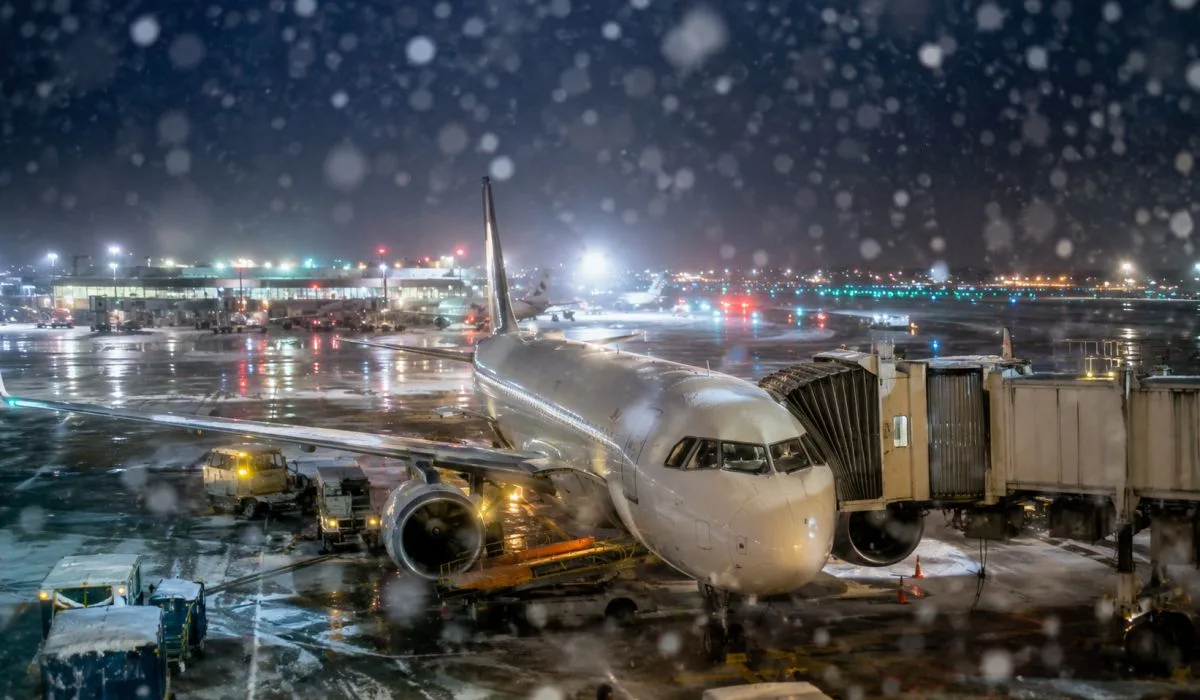
Flying this winter can be exciting, whether you're visiting family for the holidays or planning a snowy getaway.. But, there are many other challenges to air travel during the winter months including flight delays, icy runways, hectic airports and weather changes.
After all, the best way to avoid stress and a smoother ride to the airport is to know what to expect. It's time to get ready for the holidays and this guide presents 29 must-know facts about flying this winter, from the traffic to the planes, airport operations to travel tips you'll want to know all before you depart.
Why Does Winter Weather Cause Flight Delays?
Winter weather can delay flights because airports need extra time to remove snow, de-ice aircraft, and clear icy runways before takeoff. Heavy holiday travel also increases airport traffic, making even small weather disruptions lead to longer delays.
Put the magic back into winter flying
Whether it’s heading home for Christmas (perhaps for the first time in a while!) or getting ready for an adventure of a lifetime to view the Northern Lights, winter has many possibilities for us as travelers.
Traveling in the winter can definitely be a bit trickier though, and snowy airports and flights that just don’t leave when they are supposed to are certainly no fun to deal with. Fortunately, you can take several easy steps to make your next winter trip as pain-free as possible!
Read More: Travel Packing Suitcase Organizing Hacks: Smart Ways to Pack Like a Pro
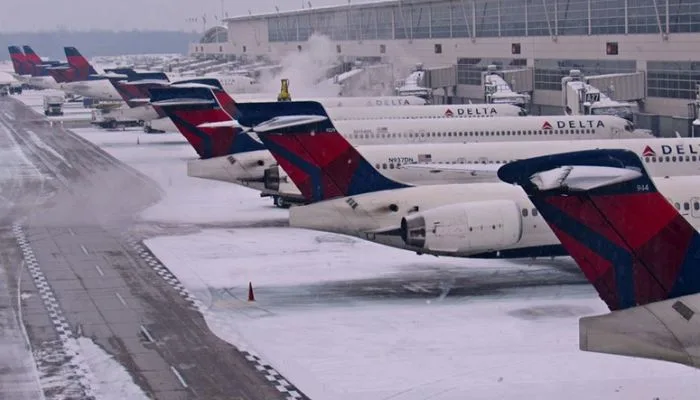
Why does winter weather cause flight delays?
A little bit of winter trouble Preparing an aircraft for flight can get a little tricky – planes need de-icing on the ground, while on the tarmac there’s the job of de-icing screens and gritting runway in snowy conditions. And in some circumstances even refueling equipment freezes in the icy temperatures.
It’s a fact that even the mildest of snowfall seems to paralyze some airports but surprisingly, it’s not the weather, it’s the flow of traffic which really becomes the problem. Traffic flow – traffic flow is the key problem here. You have to control the capacity of an airport by turning off incoming aircraft, and on a full airport, even the tiniest of events causes ripples.
What's the busiest day for air travel before Christmas?
When to fly around Christmas to avoid the holiday chaos 'The nightmare before Christmas' is set to come to life if you have to navigate the chaos of airport travel during the final few days before the big day. According to NerdWallet, a NerdWallet report in October 2025 based on past TSA information, has said that Friday, Saturday, and Sunday before Christmas are the worst days to travel by air at this time of year.
However, NerdWallet reported that Thursday prior, this year 18 December, would be the least congested pre-Christmas day, and 24th and 25th of December, but if you don't mind burning a day of your Christmas holiday with airport queuing at least it will be quiet-ish.
What’s the busiest day for a return flight?
Got a pre-Christmas flight sorted? Just be sure you’re heading home with equal aplomb! Using four years of TSA data, NerdWallet pinpointed the least busy days for a post-Christmas journey as being December 31 and January. You should avoid flying on the 26th to 29th, as those days tend to get seriously busy.
How cold is too cold for a plane?
Planes and the cold: In the air, they’re just fine While commercial aircraft can fly as high as 40,000ft (12,200m) where it is -56C (-68F), the jet fuel they run on freezes at about -40C (-40F). But as long as the fuel crew warms up before taking off, it stays a bit above freezing throughout the flight – it also travels through the aircraft’s engines where the engines warm it and keep it mobile, and the flight crew monitors this.
Is turbulence more frequent in winter?
Several sources may contribute to air turbulence, such as jet streams (powerful streams of air moving in a straight line); wake turbulence (created from airplanes flying over your plane), and thunderstorms. But there is no link between winter and a rise in turbulence - in fact, every season has its risks.
There are typically more snowstorms and more wind in winter; more rapid fronts move across the plane in the spring, and summer brings a tendency for tropical storms and autumn does too. In the year of the “Great Plains tornado outbreaks,” autumn comes in for a hit.
Can snow build up on a plane during flight?
While snow may be a nuisance at boarding crews need to de-ice wings and treat them with anti-freeze - that quickly stops being the case after takeoff. Thanks to high speed, commercial jets fly high and fast enough to be resistant to buildup, and the engines provide bleed air, a blast of hot air to the wings, preventing any accumulation of snow on aircraft.
Where’s the coldest airport in the world?
Deep within Siberia, in the large, independent region of Russia known as the Sakha Republic, there is a small village by the name of Oymyakon. It is reported that Oymyakon is the coldest region in the world inhabited by humans and can reach a sub-zero -67.7C (-89.9F) in the winter.
Unsurprisingly, the capital of the Sakha Republic, Yakutsk (929km [577 miles] from Oymyakon), is reported to be home to the world's coldest airport, with the city seeing average winter temperatures of -39C (-38F).
You May Also Read: Worlds Most Photogenic Bridges Youll Want on Your Travel List
Which countries cope best with winter weather?
However Scandinavian airports really lead the pack when it comes to dealing with the cold. Sweden's Stockholm Arlanda Airport is very proud that it has never fully closed due to snow, while Oslo Airport owns the largest vehicle for clearing snow in the world (and even two of them).
Despite its challenging winters, Helsinki Airport only closed once due to winter conditions, for just half an hour. The airport in Finland has 200 or so snow and ice clearance machines, including powerful sweeper blowers which can blow snow up to 50 metres (164 feet) away from the runway.
FAQs
1.What causes planes to get delayed more in the winter months?
The delays are due to winter weather; airports need to remove snow, de-ice planes, clear runways, and deal with heavy holiday traffic.
2. What day is the best to fly before Christmas?
It is important to remember that flights that take off a few days before the holidays, particularly early in the week, tend to be less crowded than the weekend before Christmas.
3. Do airplanes fly safely in freezing temperatures?
Yes. Commercial planes are designed to fly in very cold conditions and have systems that will keep the fuel and critical components from freezing.
4. Do the weather conditions in the winter season differ from those in other seasons?
Not necessarily. Turbulence can occur in all seasons or due to the weather, storms, and jet streams.
5. What can I do to get ready to fly this winter?
Check local weather conditions before heading to your airport; arrive early; keep an eye on your flight; bring winter essentials to your plane; travel with extra time.