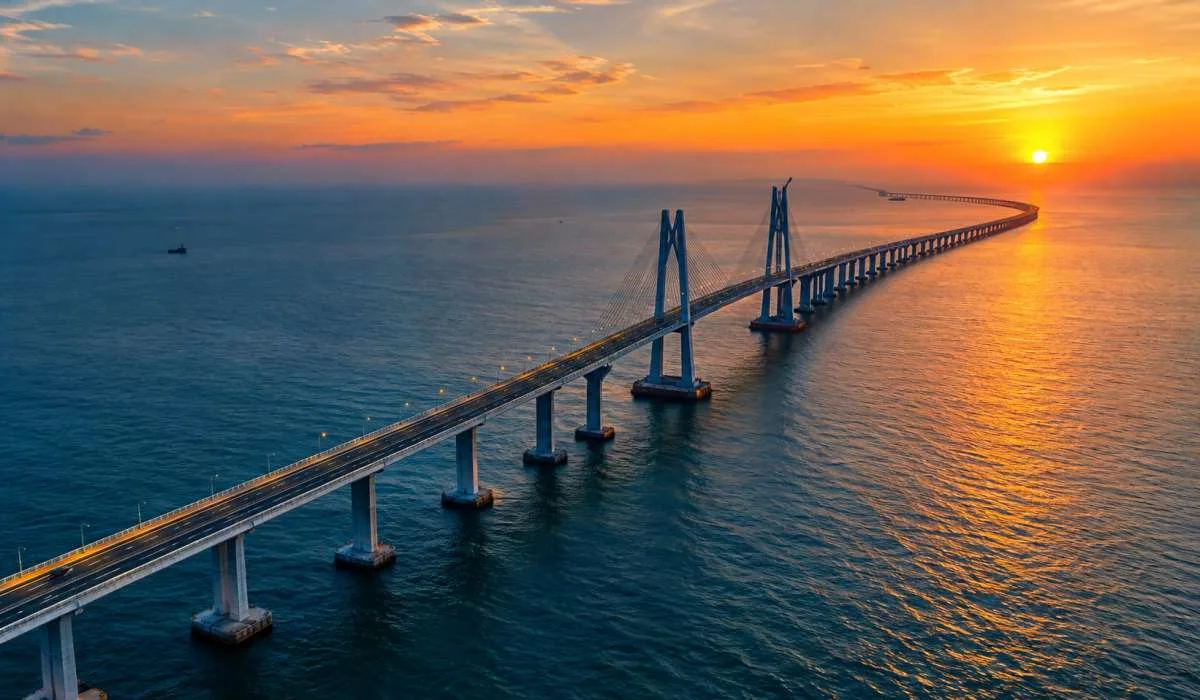
The longest bridges in the world show how modern engineering can connect places separated by rivers, seas, cities, and difficult landscapes. They are enormous structures that are used for various purposes, such as road transport, high-speed rail and large-scale transport networks. Some are a dozen kilometers long and have become important parts of the regional infrastructure.
There are a number of extraordinary examples in China and great elevated structures and causeways in Brunei, Kuwait, Indonesia and the Philippines. Unlike rail and river bridges, there are no universal engineering requirements or typical uses for every sea bridge. Let's take a peek at some of the longest and most amazing bridges in the world.
A Journey Across the World’s Most Remarkable Bridges
When it comes to bridges, people often say that big is beautiful. Nations love to tout their impressive bridges, their engineering brilliance, and the vast widths they cover. Bridges, viaducts, and elevated roads carry high-speed trains and road vehicles over water, across sprawling urban areas, and through rugged terrains. Join us as we count down the longest bridges in the world, all working diligently to keep a city's traffic flowing smoothly.
Sultan Haji Omar Ali Saifuddien Bridge, Brunei
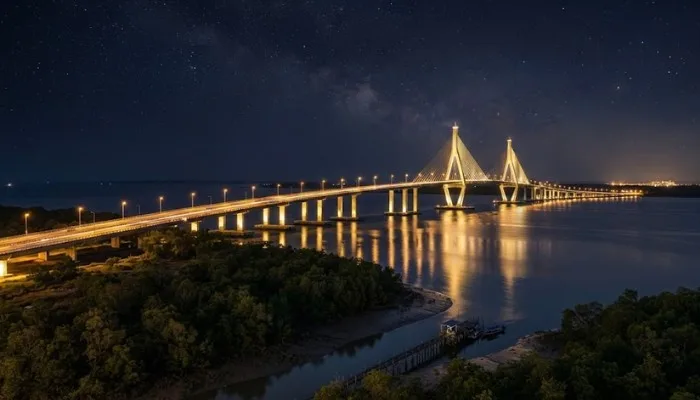
The 30-kilometer (19 mile) Sultan Haji Omar Ali Saifuddien Bridge in Brunei connects the Southeast Asian nation's mainland to Temburong district and its designers intended it to serve as an economic catalyst that ensures commercial vehicles keep flowing across the entire stretch.
The structure showcases an award-winning lighting concept that reportedly embodies the unique personality of the community.
Read More: The Best US Hot Springs You Can Actually Soak In: Top Natural Hot Springs to Visit
Donghai Bridge, China
Sometimes named after the East Sea Grand Bridge, which is China's first bridge across a sea, the bridge was completed in 2005. The impressive 6-lane cable-stayed structure spans the East China Sea, effectively linking the bustling city of Shanghai to Yangshan Island, located about 20 miles away.
As part of a strategic plan to develop the area into the country's first free-trade port, it may also evolve into the world's largest container port in the future.
Lima Metro Line 1, Peru
Lima Metro Line 1, Peru boasts of South America's longest railway bridge. The 34 km (21 mi.) railway line links 26 stations (of which 16 are slightly elevated and 10 elevated). Due to the densely populated areas that the railway crosses, highways, the old center of Lima and the Rmac River, construction was very complicated.
To keep construction to a minimum as far as possible in time and avoid closures, the builders planned to use pre-cast components and – for the segmental bridges – to make use of the free-cantilever construction method.
Runyang Bridge, China
The world's largest bridge complex, which measures over 35 km (22 mi.) in length, spans the Yangtze River in Jiangsu Province, China, just below Nanjing. Engineers have built a cable-stayed bridge, which is one of the world's largest suspension bridges, to span the river with its impressive main span.
The bearings and expansion joints have begun to show signs of accelerated deterioration, and the engineers have utilized a robo-control monitor to effectively implement necessary remedial measures after a few years of service.
Hangzhou Bay Bridge, China
With its boast of being the "longest ocean crossing bridge in the world," the Hangzhou Bay Bridge proudly crosses the Qiantang River, seamlessly connecting Zhenjiadai, Jiaxing, and Haiyan City in the north to Ningbo, Cixi, and Shuiluwan City in the south within the Zhejiang Territory.
The impressive six-lane bridge stretches over a remarkable length of 36 km (22 mi.) and effectively reduces the drive time between Shanghai and Ningbo by approximately 120 km (75 mi.), thereby relieving congestion on other roads in the area.
Yangcun Bridge, China
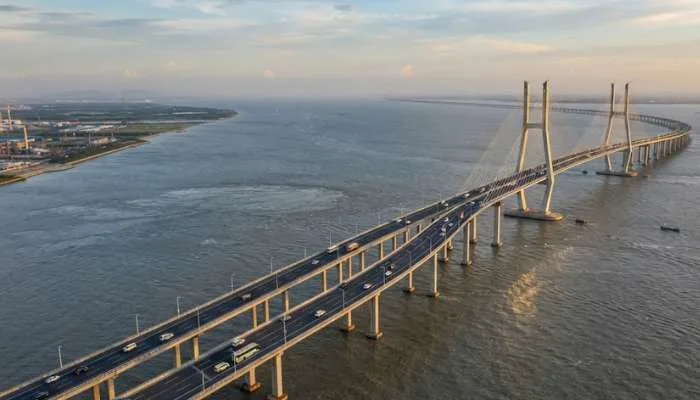
In 2007, engineers completed the 36 km (22 mi.) Yangcun Bridge, which serves as a significant section of the Beijing-Tianjin Intercity Railway, noted as China's first high-speed train link featuring 230 pairs of trains that travel along a 120 km (76 mi.) stretch and take between 21 minutes and an hour and a half to complete.
The impressive trains run from Beijing South railway station to Tianjin railway station, with some stopping at either Tianjin West or Tianjin South railway stations.
Sheikh Jaber Al-Ahmad Al-Sabah Causeway, Kuwait
The engineers designed the primary causeway segment to be 36 km (22 mi.) in length, extending the large-scale network that connects the capital Kuwait City with the Subiyah area. The construction team built the causeway to include a sea bridge measuring 26 km (16 mi.), along with a cable-stayed bridge, a land connection, and 2 artificial islands.
The bridge significantly decreases driving times for residents traveling through Kuwaiti Bay and is expected to support ongoing economic zones.
Sheikh Mohamed bin Zayed Skyway, Indonesia
In 2021, authorities renamed the 37 km (23 mi.) Jakarta-Cikampek Elevated Toll Road to Sheikh Mohamed bin Zayed Jakarta-Cikampek Elevated Toll Road to honor the crown prince of Abu Dhabi and the deputy supreme commander of the armed forces.
The name change serves to pay tribute to the crown prince for his efforts in boosting relations between the two nations. The UAE stands as the largest foreign investor in Indonesia.
You May Also Read: Best Islands for Couples Vacations: Romantic and Budget-Friendly Getaways
Metro Manila Skyway System, Philippines
The authorities have officially designated the new railway or not-railway as measuring 22.5 miles in length from San Jose to Rodriguez/Brgy. San Jose, and they have structured it to consist of 2 lines that are separated by 300 meters, running parallel to one another. This system includes 6 stations, with 3 located in the Real Subdivision, 2 situated in the San Mateo/Antipolo branch line, and 1 serving as the terminus.
FAQs
1. What is the longest bridge in the world?
The answer depends on how a bridge is classified and measured. Some rankings include continuous viaducts and elevated railway structures, while others focus only on individual bridge crossings.
2. Which country has many of the world's longest bridges?
China has several structures among the world's longest bridges, including major road and railway bridges.
3. Why are some bridges built so long?
Long bridges help transport networks cross large bodies of water, wetlands, rivers, floodplains, and densely developed areas without requiring numerous separate structures.
4. Are the longest bridges used for trains or cars?
Both. Some are designed for road traffic, while others carry railway lines. Several large transport projects combine bridges, viaducts, roads, and other elevated structures.
5. What makes a very long bridge difficult to build?
Engineers must consider foundations, weather, wind, water depth, traffic loads, expansion, construction methods, maintenance, and the surrounding environment.