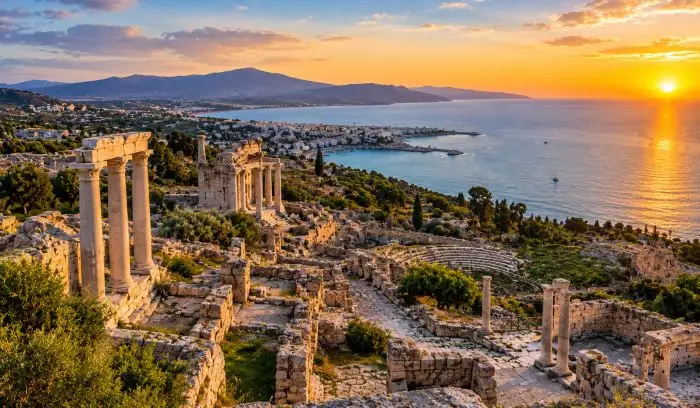
The oldest cities in the world offer a fascinating look at human history, ancient civilizations, and cultural traditions. These cities are thousands of years old, have seen the rise and fall of empires and have recorded stories from the past. Each location, from Jericho in Palestine to Byblos in Lebanon, has its own story, its own historic sites and treasures.
Others were significant trading hubs and others were important religious or political destinations. These ancient cities shed light on the ways people lived, traded and organized communities in the distant past. Today their rich heritage continues to draw the history enthusiast and traveller from around the world.
Discover the Ancient History Behind These Historic Cities
Discover the ancient history behind these historic cities and learn how they shaped early human civilization. From ancient trading ports to important religious centres, each city has a unique story, rich culture, and landmarks that have survived for thousands of years.
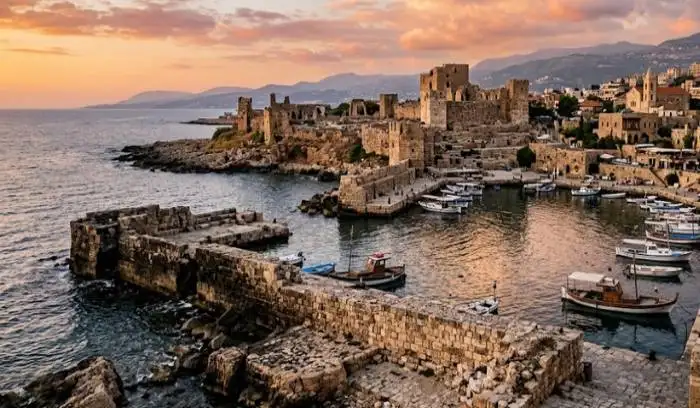
Byblos, Lebanon
Aptly named the "oldest city in the world" in 1963, Byblos serves as the ancient Phoenician port where papyrus trade to Egypt occurred. Human presence in Jbeil in Arabic has existed since 8800-7000 BC, with evidence of settled human development from circa 5000 BC.
Over the millennia, at least four cultures have controlled Jbeil: Egypt, Phoenicia, Greece, and Rome. In fact, it is considered to come from the Greek word for papyrus and is believed to be the place where the English word "bible" originates.
Read More: 20 Most Luxurious Train Journeys in the World
Aleppo, Syria
Next up we have the Syrian city of Aleppo, listed as a city as far back as the 3rd millennium B.C., with evidence of continued occupation from at least a thousand years earlier. Its location in the Middle East, just south of the Turkish border and east of the Mediterranean Sea, positioned it in the middle of trade routes since the 2nd millennium B.C.
Different empires have dominated it throughout history, each leaving their mark. However, none are as notable as Aleppo Citadel, a stunning 13th-century Islamic castle and one of the oldest intact castles in the world. The castle beneath it shows evidence of even earlier human occupation, reflecting Aleppo's history as a human hub. Unfortunately, the recent Syrian Civil War has embroiled Aleppo in conflict. For this reason, we do not recommend traveling to Aleppo.
Susa, at the foot of the Zagros Mountains in western Iran, has continuously housed people since around 7,000 B.C. It ranks among the world's most archaeologically rich regions due to its location at the intersection of the Mesopotamians and the Iranian plateau civilizations.
The Elamites made it their capital, and it played a significant role in the Achaemenid Empire, with ongoing conflicts and habitation throughout history. Today, it is known as Shush, where you can explore its ancient past at the UNESCO-listed archaeological site with well-preserved remains. The beautiful 19th-century Shush Castle is a more recent attraction. We currently cannot recommend travel to Iran due to the ongoing conflict.
Gaziantep, Turkey
Situated in the southern part of Turkey close to the Syrian border, settlers established Gaziantep in 3,650 B.C. Originally called Antep, the city of Gaziantep offers many historical attractions for visitors to enjoy, including the Gaziantep Fortress and Ravanda citadel, which the Byzantines renovated in the 6th century; and the Rumkale ruins.
Also of interest is the Zeugma Mosaic Museum – the biggest in the world; and the city boasts more than 150 pastry shops (known as baklava) and an item that you should definitely sample when visiting; we mean the pistachio baklava.
Jerusalem, Israel
City of three great faiths: Jerusalem holds special religious importance for Judaism, Christianity, and Islam and sits on a plateau between the Dead Sea and the Mediterranean. It ranks among the world's most ancient surviving cities, and archeological remains of its continuous inhabitation date back to around the 4th millennium BCE. It carries significance for all three great faiths, as the location of Jesus' death and resurrection, and also as the place from where people believe Muhammad ascended to heaven.
Beirut, Lebanon
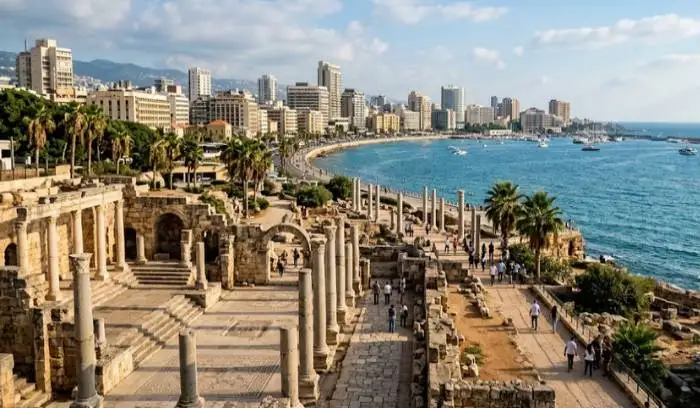
Lebanon's biggest city has populated the area for more than 5000 years. Positioned on a peninsula on the Mediterranean coastline of Lebanon, the city of Beirut has a total population of 2.5 million, which accounts for almost the entire population of Lebanon. There's no shortage of history of Beirut visible through its building style. Its previous old name during Roman rule was Berytus, which gained popularity due to the law school.
You May Also Read: 8 Epic and Underrated National Parks You Should Visit
Jericho, Palestine
The city that is in the region east of the country, Jordan, is in the Arab state of Palestine with a population of 20,000 inhabitants; it is the oldest city in the world, Jericho. Firstly, archaeologists have made discoveries dating back 11,000 years.
This city, which has been destroyed many times (by various invaders including their ancestors and the three prominent ones), still retains its value and has several religious and tourist sites to visit, among which are the Mount of Temptation where Jesus was tempted by Satan and Nabi Musa (the tomb) where the tomb of Moses is believed to be. (See: the travel healthy tab of region E of the current.)
Luxor, Egypt
The lovely Egyptian city of Luxor sits on the banks of the River Nile some 400 miles south of the Pyramids of Giza. It was a city long before the modern name of Luxor came about; it has history dating back 5,000 years, while its namesake temple dates back to roughly 1,400 B.C and links by a giant avenue with the ancient Temple of Karnak.
Once known as Thebes, this was one of the ancient, major capitals of Egypt and the city stands as a history lover's paradise today; people say it is one of the longest settled towns on earth, and it houses not one but two ancient and carefully preserved temple complexes, not to mention it provides easy access to the Valley of the Kings and the River Nile.
FAQs
1. What is the oldest city in the world?
Jericho, located in Palestine, is often considered one of the oldest continuously inhabited settlements in the world, with archaeological evidence of human activity dating back around 11,000 years.
2. Which are some of the oldest cities in the world?
Some of the oldest cities include Jericho, Byblos, Aleppo, Susa, Jerusalem, Beirut, and Luxor. Their histories span thousands of years.
3. Why are ancient cities important?
Ancient cities help us understand early human settlements, trade, religion, architecture, and the development of civilizations. They also preserve valuable archaeological sites and cultural traditions.
4. Which is the oldest city in Lebanon?
Byblos is widely recognised as one of the oldest continuously inhabited cities in Lebanon. It was an important Phoenician trading port known for its connection to the papyrus trade.
5. Can you visit the oldest cities in the world?
Many ancient cities welcome visitors and offer historical landmarks and archaeological sites. However, travel safety varies by location, so travellers should check current official travel advisories before planning a visit.